
How to Calculate Cost per Non Woven Bag (Simple Factory Formula)
Retailers in North and Latin America ask for a landed bag price. To answer them, you need a clear cost-per-bag model — not a guess. Here is a factory-side formula packaging plants use with OUNUO / OYANG non-woven lines.
Core formula
Cost per bag ≈ Material + Labor + Energy + Consumables + Overhead + Amortized machine cost
1. Material (usually 50–70% of cost)
- Bag weight (g) × fabric price ($/kg) / 1000
- Add handle / laminated film / printing ink if applicable
- Include scrap rate (typically 2–5% for a stable line)
Example: a 40 g D-cut bag, fabric at $1.80/kg → material ≈ $0.072 before scrap.
2. Labor
- Operators per shift × hourly cost / bags produced per hour
- Fully automatic box-bag lines need fewer people than semi-auto handle sealing
3. Energy and consumables
- kWh × local electricity price / bags
- Blades, Teflon, pneumatic parts averaged per month
4. Machine amortization
- Machine investment / expected bags over 5–7 years (or your payback target)
- Higher speed and less downtime lower this line item quickly
Why machine choice matters
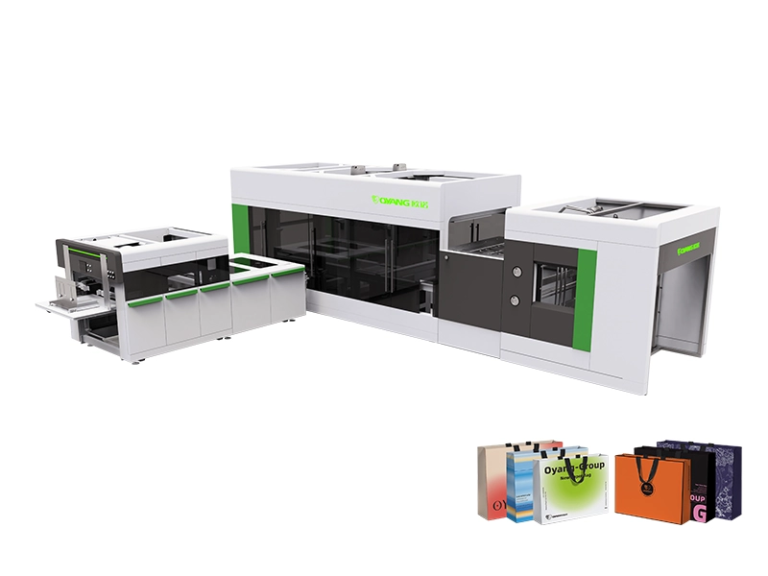
A higher-capacity automatic line (for example OYANG-17 box bag or SMART-17 multi-function) costs more upfront but often wins on labor and scrap for supermarket programs. A simpler D-cut machine can be right for smaller runs.
Send Michael your bag size, GSM, monthly volume and country. We will map a realistic cost structure and recommend a machine configuration for the Americas market.